Memory champions are not born with special brains, researchers say. They train.
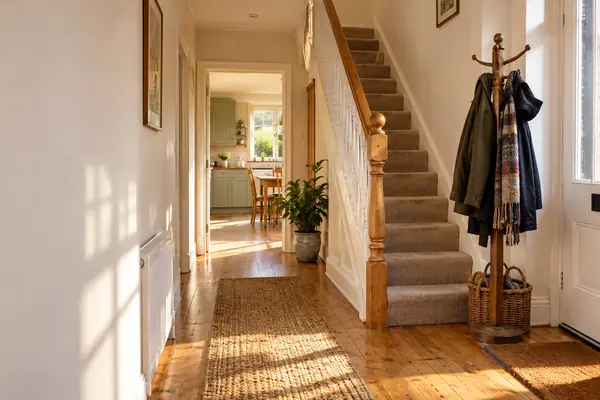
Their favourite tool is the method of loci, or memory palace, used by Greek and Roman orators. You picture each item at a spot along a route you know well, then walk the route in your mind to get them back.
Pick a memory technique to see what it is good for. The bar shows how strongly the research behind this page backs it for memories that last.
Ratings from Dunlosky et al. (2013) and the memory palace training studies of Dresler et al. (2017) and Wagner et al. (2021).
TWO NUMBERS WORTH KNOWING
Champions recall almost everything, and novices can catch up a lot.
One figure from memory athletes, one from ordinary people after six weeks.
70.8 of 72
Words recalled out of 72, twenty minutes after learning them
Seventeen of the world's leading memory athletes averaged 70.8 of 72 words, against 39.9 for matched controls with no mnemonic training.
MEMORY ATHLETES · NEURON 2017
16.6 → 42.3 words
Random words memorised in 5 minutes, start to end of training
Novices practised the method of loci in 40 sessions of 30 minutes over six weeks. Their best scores rose steadily throughout the training.
SIX WEEKS OF TRAINING · NEURON 2017
Both studies trained adults who had no previous experience of mnemonic strategies; the 2017 study's 51 trainees and controls were all young men.
BUILD A MEMORY PALACE
Five spots, one walk.
This is the University of Auckland's study-skills exercise for the method of loci, set out step by step.
Choose a familiar place
Your house or local area works well, because you already know it without effort.
Fix five distinct spots
Walk the route and memorise distinct locations along it, such as the front door, the stairs and the kitchen table.
Place one item at each spot
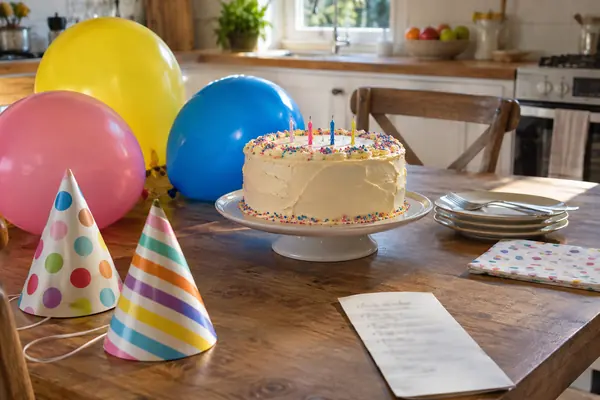
Picture each thing to remember at one location: balloons at the door, a cake on the stairs. Your own images work best.
Walk it back
To recall, take the same walk in your mind and look at what is waiting at each spot.
AI-generated image, not a photograph of a real person or place.AI-generated image, not a photograph of a real person or place.
WHERE MNEMONICS FALL SHORT
Remembering is not understanding.
The University of Auckland's guide warns against overusing mnemonics, because they can get confusing, and reminds students that it is important to understand material, not just remember it.
Dunlosky and colleagues found the keyword mnemonic and imagery for text learning gave limited benefits, while practice testing and spacing study out over time had high utility. Mnemonics shine for lists and order; for understanding, test yourself.
Questions
Questions people ask
What is a mnemonic?
A strategy for remembering information. Common types include the method of loci, pegwords, stories, acronyms and acrostics, where the first letters of words form a word or a memorable sentence.
What is a memory palace?
Another name for the method of loci. You imagine items placed at distinct spots along a route you know well, then mentally walk the route to recall them in order.
Do memory champions have special brains?
Researchers say superior memory seems to come from deliberate training in mnemonic strategies rather than extraordinary brain anatomy or general cognitive superiority.
How long does it take to get better?
In a 2017 study, novices who trained in the method of loci for 40 sessions of 30 minutes over six weeks rose from 16.6 to 42.3 random words memorised in 5 minutes.
Are mnemonics good for revising?
For lists and sequences, they can help. A 2013 review rated the keyword mnemonic low utility overall and gave its highest ratings to practice testing and spacing study sessions out.